ESA Rights: A Complete Guide to Federal Housing Protections in 2026
June 20, 2026Online Medical Marijuana Evaluation: The 2026 Guide to Finding a Marijuanas Card Near Me
June 21, 2026
The moment your doctor says “yes” is a major relief, but it doesn’t always mean you can head straight to dispensary doors. You’ve finished the evaluation. You’ve received the recommendation. Now, the waiting game begins. It’s natural to feel anxious while waiting for state registration to process, especially when you need relief now. Understanding how long to get medical card after approval depends entirely on your state’s specific digital infrastructure and delivery process.
In 2026, many states have shifted toward digital-first systems to bridge the gap between approval and access. Is it a digital download? A physical mailer? A same-day certification? You might be able to shop today with a temporary ID, or you may need to wait for the mail. This guide provides a clear, state-by-state breakdown of current timelines for Florida, California, New York, and Mississippi. We’ll help you navigate the registration steps, avoid common filing errors, and determine exactly when you can legally access your medication. It’s about clarity, speed, and your peace of mind.
Key Takeaways
- Understand the critical difference between a provider’s clinical certification and the state’s administrative registration to accurately plan your first dispensary visit.
- Discover exactly how long to get medical card after approval in your state and whether you can start shopping immediately with a digital ID.
- Spot the most frequent administrative mistakes and residency documentation hurdles that could slow down your path to relief.
- Review 2026 state-specific timelines to see which regions now offer streamlined, automatic registration for eligible patients.
- Learn how a professional evaluation with CMed can help simplify the first half of your application journey.
Understanding the Approval Gap: Doctor vs. State
Many patients believe that a doctor’s “yes” is the final step in their journey. It’s an understandable mistake. You’ve had your evaluation. You’ve discussed your health. You’ve received a recommendation. However, a physician’s sign-off is not a direct ticket to a dispensary. It is a clinical certification that signals you meet the state’s criteria. The actual legal authority to purchase comes from the state government, not the doctor. This distinction is the primary factor in how long to get medical card after approval because the doctor’s sign-off is only the start of the state’s administrative review.
The process is divided into two distinct chapters. First, you secure a clinical recommendation. Second, you complete the administrative registration. Because Medical cannabis in the United States is regulated on a state-by-state basis, these two phases can look very different depending on where you live. Some states have merged these steps into a single day. Others maintain a strict wall between the doctor’s office and the state registry. This is why you cannot always shop the moment you leave your appointment.
The Physician Recommendation Phase
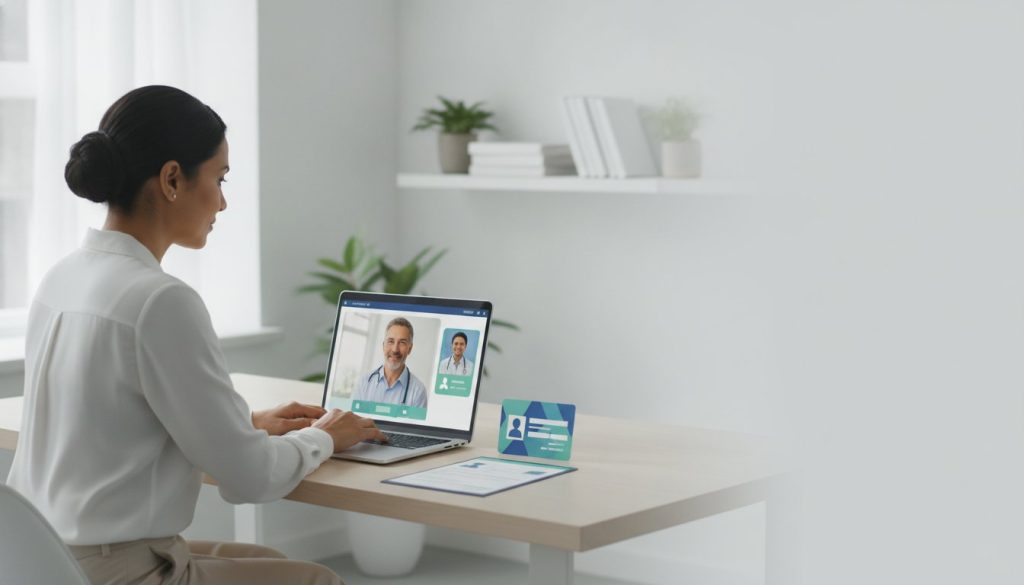
During your virtual evaluation, a licensed professional will review your qualifying conditions. They aren’t just checking boxes. They are ensuring medical cannabis may be a safe and appropriate option for your specific situation. Once the provider confirms your eligibility, they upload your certification directly to the state’s secure portal. Choosing a telehealth evaluation is often the most efficient choice. It’s fast. It’s private. It’s convenient. Most importantly, it ensures your records are transmitted to the state without the delays of physical paperwork or mail. At CMed, we focus on making this first half of the journey as clear as possible.
The State Registry Processing Phase
After the clinical sign-off, the administrative work begins. Your state’s Department of Health or cannabis agency must now process your application. This is where they verify your identity, confirm your residency, and collect any required state fees. This phase is the biggest variable in how long to get medical card after approval. Some states, like New York, utilize automated systems that issue a digital certification almost immediately. Others, like Florida, may take an average of 10 business days to review your profile. You may need to provide a photo ID or a utility bill to prove your status. This step ensures the program remains compliant and secure for all participants while protecting your legal status as a patient.
Digital vs. Physical Cards: How Your State Delivers
The way you receive your credentials has changed significantly. In 2026, most state programs favor speed. They want you to have access to your medication without unnecessary delays. Once the state administrative review is complete, your primary focus should shift to your inbox. This digital notification is often your first legal proof of patient status. Is it a PDF? A wallet pass? A simple confirmation email? The format varies, but the purpose is the same. In many jurisdictions, this “Approval Email” acts as a valid temporary ID. You can often present it at a dispensary while your physical card is still in production. This shift has fundamentally changed how long to get medical card after approval by removing the traditional reliance on the postal service.
To ensure a smooth transition, check your spam folder regularly. Mark your state’s health department as a safe sender. Save the approval document to your cloud drive. These small steps prevent technical hurdles from standing between you and your relief. If you are unsure about your eligibility, you can talk with a licensed provider to see if medical cannabis may be an option for you.
States with Immediate Digital Access
New York has set a high standard by eliminating physical cards entirely. Patients in the Empire State receive a digital certification and can visit a dispensary almost immediately. Other states utilize a hybrid model that prioritizes digital speed. For instance, Colorado’s medical marijuana registry is known for its high efficiency, frequently processing applications in just 1 to 3 business days. Digital IDs offer several distinct advantages. They cannot be lost in the mail. They are easy to update. They provide instant peace of mind. Most modern dispensaries are fully equipped to scan these digital barcodes directly from your smartphone screen, making the process both fast and secure.
States Still Requiring Physical Mail
Even with the rise of digital tools, some states still maintain a physical card requirement. Florida and Mississippi both issue hard-copy IDs, though Florida provides a temporary digital version to bridge the gap. If your state requires a physical card, you should generally expect a 7 to 14 business day window for USPS delivery. It is a period that requires patience. If your card does not arrive within 21 days, you should contact the state’s registry office to verify your information. A simple typo in a zip code or apartment number is the most common cause for a lost card. Once it arrives, keep your physical card in a protected sleeve. Treat it with the same care as your driver’s license to ensure it remains valid and readable for the duration of your certification.
National Timelines: What to Expect After Approval
Determining how long to get medical card after approval depends on the administrative engine behind your state’s registry. While your doctor’s evaluation is the first step, the speed of the second step is dictated by state-level staffing, application volume, and the age of their technology. Some states have invested in sophisticated, automated systems that cross-reference existing state databases. Others still rely on a manual review process where a state examiner must personally verify every uploaded document. This human element is why timelines can shift without notice.
It is also important to account for seasonal surges. State registries often experience a higher volume of applications during the start of the year or around major holidays. These peaks can stretch a standard wait time by several days. If you are applying during these busy periods, ensure your paperwork is perfect to avoid being sent to the back of the line. At CannaCare Docs, we see these variations across the 30 states we serve, and we encourage patients to plan their renewals at least 30 days in advance to avoid a lapse in coverage.
Fast-Track States (0-48 Hours)
A growing number of states now offer what is effectively a near-instant turnaround. These jurisdictions utilize automated verification systems that link directly to the Department of Motor Vehicles (DMV) or other state ID databases. When your information matches exactly, the system can trigger an approval without human intervention. To prepare for this, you must ensure that the name and address on your medical application match your state ID precisely. Even a small discrepancy, like “St.” versus “Street,” could kick your file out of the automated queue and into a manual review pile. These states prioritize digital accessibility, allowing you to move from your evaluation to the dispensary in less than two days.
Standard Processing States (5-14 Days)
In many parts of the country, a manual review is still the standard procedure. In these states, an examiner must verify your physician’s certification, confirm your residency documents, and process your payment. Oklahoma’s patient license process is a prime example of this workflow, where the state may take up to 14 business days to review and approve an application. During this window, your file moves through a specific sequence. It is received, queued, reviewed, and finally approved. You can typically track this progress through your state’s online portal. If your status remains “Pending” for more than two weeks, it is often a sign that the registry is experiencing a high volume of filings or that there is a minor issue with your documentation. Knowing how long to get medical card after approval in these regions helps you set realistic expectations for your first purchase.

Common Reasons for Delays and How to Avoid Them
Even with streamlined digital systems, administrative friction can still slow down the process. Most delays aren’t caused by the state’s technology but by small errors in the initial application. When patients ask how long to get medical card after approval, they often forget that the clock stops if the state sends a rejection notice. Common issues include blurry photo uploads, expired identification, or failed payments for state fees. Ensuring your application is clean and accurate is the most effective way to keep your timeline on track. If you’re ready to start the process correctly from the beginning, you can schedule an evaluation with a licensed provider today.
The “Passport Photo” trap is a frequent hurdle for new applicants. Most states require a photo that meets specific government standards. A casual selfie in front of a busy background or wearing a hat will likely be rejected. Use a plain, neutral background. Ensure your face is clearly visible. Avoid shadows or filters. Similarly, if your state requires an application fee, verify that the transaction clears. A declined card or a pending bank hold can prevent your file from even reaching an examiner’s desk.
Documentation and ID Matching
Your address on the application must perfectly match the address on your state ID. If you’ve moved recently and haven’t updated your driver’s license, the state registry may flag your file for manual verification. This adds days or even weeks to the review. ‘Residency proof’ is defined as official documentation that confirms your current living status, such as a recent utility bill, a signed lease agreement, or a valid voter registration card. Clear, unexpired government identification is the foundation of a successful filing. If your ID expires soon, renew it before starting your medical cannabis application to avoid an automatic rejection.
The Importance of Accurate Contact Info
A single typo in your email address can be a major setback. This is how the state delivers your digital card or notifies you if a correction is needed. If you haven’t heard from the state within the expected timeframe, check your spam folder immediately for ‘Correction Required’ notices. Use a primary email address that you check daily rather than a temporary or secondary account. Staying alert to these communications is vital for knowing how long to get medical card after approval in your specific case. These small details ensure your path to relief remains as short as possible.
Start Your Fast-Track Evaluation with CMed
The first half of the journey is entirely under your control. While state administrative reviews vary, the clinical evaluation can be completed with speed and precision. CMed acts as your expert facilitator. We connect you with licensed doctors across more than 30 states through a secure, digital-native platform. By choosing a professional evaluation, you remove the guesswork from the initial filing. This proactive approach is the best way to minimize how long to get medical card after approval because it ensures your clinical records are accurate and uploaded correctly the first time.
We believe the process should be accessible and stress-free. This is why we offer a risk-free policy. If a provider determines you do not qualify for a medical recommendation, you do not pay for the evaluation. It is a simple, transparent, and patient-first commitment. Whether you are visiting a CannaCare Docs location or a Relaxed Clarity clinic in Denver, Westminster, or Colorado Springs, our goal is to provide clarity and ease. Our team has helped hundreds of thousands of patients navigate these requirements with confidence.
Secure and HIPAA-Compliant Telehealth
Booking a same-day appointment is straightforward. You can use your smartphone, tablet, or computer to connect with a practitioner from the comfort of your home. The clinical evaluation typically takes 10 to 15 minutes. During this time, the doctor will review your medical history and discuss if medical cannabis may be an option for your condition. We help you gather the necessary documentation to ensure a smooth transition to the state registry. It is simple. It is secure. It is reliable. This efficiency sets the stage for a faster overall experience.
Your Path to Legal Status Starts Here
Maintaining a medical patient status offers significant benefits, even in states with recreational laws. Patients often receive lower tax rates, higher possession limits, and stronger legal protections. If you are ready to begin, our How to Get a Medical Marijuana Card Online: The Complete 2026 Patient Guide provides a deeper look at the 2026 requirements. Don’t let uncertainty about how long to get medical card after approval keep you from seeking relief. See if medical cannabis may be an option for you by scheduling an evaluation today. Your path to legal access is just one consultation away.
Take Control of Your Medical Cannabis Journey
The path from your doctor’s office to the dispensary counter is clearer than it seems. You now understand the vital difference between clinical certification and state registration. You also know that digital delivery can cut wait times from weeks to hours in many jurisdictions. By avoiding common administrative errors like blurry photos or address mismatches, you can ensure your application moves through the system at the fastest possible pace. Determining how long to get medical card after approval depends on your state’s infrastructure, but the first step is always the same.
You need a professional evaluation from a licensed provider who understands the regulatory landscape. CMed offers secure telehealth evaluations in over 30 states. Our process is 100% HIPAA-compliant and operates on a risk-free basis. If you aren’t eligible, you don’t pay. Get Started Now: Book Your Risk-Free Medical Card Evaluation. Relief is closer than you think, and our team is ready to guide you through every registration step with clarity and care.
Frequently Asked Questions
Can I go to a dispensary the same day I am approved by the doctor?
Whether you can visit a dispensary the same day depends entirely on your state’s digital infrastructure. In states like New York, registration is automatic and immediate, but in others like Florida, you must wait for the state to process your application and issue a temporary digital card. This administrative review typically takes about 10 business days before you can legally make a purchase.
What should I do if my medical card hasn’t arrived in the mail after 3 weeks?
If your physical card hasn’t arrived after 21 days, you should contact your state’s medical marijuana registry office directly. Verify that your mailing address was entered correctly without typos and check your email spam folder for any “Correction Required” notices. In some cases, a simple error in your zip code or an unclear photo upload can pause the delivery of your credentials.
Is there a way to expedite my state’s medical marijuana application?
Most states don’t offer a formal “expedited” service for an extra fee. The best way to ensure a fast turnaround is to submit a perfect application with a clear passport-style photo and address documentation that matches your state ID exactly. This allows your file to move through automated verification systems without being flagged for a time-consuming manual review by a state examiner.
Does my doctor’s recommendation expire if the state takes too long to approve me?
Physician recommendations are typically valid for a full year, so it’s highly unlikely the state’s administrative review will outlast the certification itself. However, you should submit your state application as soon as possible after your appointment. This ensures you maximize the active duration of your card and avoids any confusion regarding how long to get medical card after approval in your specific jurisdiction.
Can I use my approval email to buy cannabis at a dispensary?
In certain states like Florida, the official approval email from the Department of Health serves as a valid temporary ID for dispensary purchases. You should check your specific state’s regulations before heading to a shop. Some jurisdictions require you to wait for a downloadable PDF or a physical card with a specific barcode before your first transaction is permitted by the dispensary’s point-of-sale system.
Do I need to pay the state fee immediately after my doctor’s appointment?
You should pay the state registration fee as soon as your doctor uploads your certification to the registry. The state will not begin the administrative review process until they receive your payment. Delaying this step will directly impact how long to get medical card after approval, as the processing clock only starts once your application is considered complete and paid in full.
What happens if the state denies my application after the doctor approved me?
If the state denies your application, it’s usually due to an administrative error rather than a medical disagreement. You’ll typically receive an email explaining the specific issue, such as an unclear photo or insufficient residency proof. You’ll be given an opportunity to correct the mistake and resubmit your file without needing a new evaluation from your medical provider in most cases.
How long does a medical card renewal take compared to a new application?
Medical card renewals are often processed faster than new applications because your identity and residency are already established in the state system. While new applications may take 10 to 14 days, some states can process a renewal in just a few business days. We still recommend starting your renewal process at least 30 days before your current card expires to avoid any potential lapse in your legal access.
Disclaimer
This article is for educational purposes only and is not intended as medical, legal, or professional advice. Medical cannabis laws, qualifying conditions, registration requirements, possession limits, purchase limits, telemedicine rules, and renewal processes vary by state and may change over time. Patients should confirm current requirements with their state program and consult with a licensed medical provider to determine whether medical cannabis may be appropriate for their individual situation. CMed, CannaCare Docs, and Relaxed Clarity do not guarantee approval, certification, state registration, legal protections, employment protections, cost savings, or specific medical outcomes.